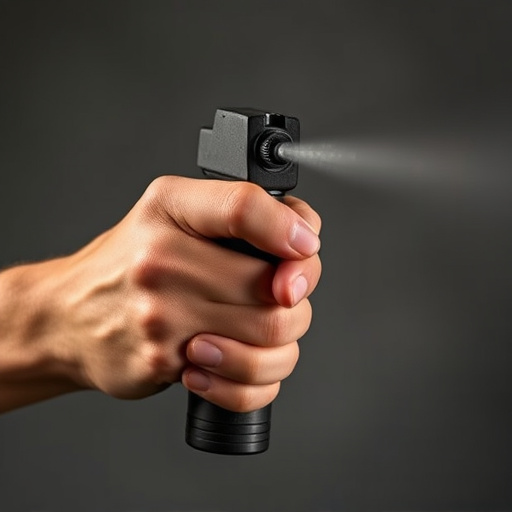
Despite its effectiveness in wet conditions, pepper spray's potency is diminished by rain due to water's impact on its chemical agents and rapid evaporation. Modern formulations aim to overcome these challenges, but rain still dilutes capsaicin solutions, reducing pepper spray's riot control capabilities. Scientists are developing innovative carriers, coatings, and compositions to enhance its effectiveness against wet environments, ensuring law enforcement have powerful tools for crowd control, even in heavy rainfall.
“Uncover the power and pitfalls of an essential tool in riot control: the inflammatory riot control spray dispenser. This article delves into the mechanics of pepper spray technology, shedding light on its effectiveness—especially under wet conditions. We explore the challenges posed by rain and damp environments, delving into scientific insights to understand how pepper spray performs in these unique circumstances. Additionally, we examine future prospects for enhancing its efficacy in various weather conditions, focusing specifically on improving its performance during heavy rainfall.”
- Understanding Pepper Spray Technology: How Does it Work?
- The Challenges of Using Pepper Spray in Wet Conditions
- Evaluating Pepper Spray Effectiveness in Rain: Scientific Insights and Future Directions
Understanding Pepper Spray Technology: How Does it Work?
Pepper spray, also known as oleoresin capsicum (OC) spray, is a non-lethal weapon designed to disable and disorient targets through temporary blindness, breathing difficulties, and intense pain. At its core, pepper spray technology relies on capsaicin, the chemical compound responsible for the heat sensation in chili peppers. When activated, the dispenser releases a fine aerosol mist containing capsaicin, which bonds with nerve endings, causing an overwhelming response in the affected individual.
The effectiveness of pepper spray, even in challenging conditions like rain, is attributed to its rapid evaporation rate and low viscosity. Unlike some traditional sprays that may be diluted or less effective when wet, modern pepper spray formulations are designed to dry quickly on contact with skin or eyes, ensuring maximum potency. This makes it a reliable tool for law enforcement and security personnel to manage crowd control and respond to violent situations, even in adverse weather conditions like rain.
The Challenges of Using Pepper Spray in Wet Conditions
Using pepper spray in wet conditions presents unique challenges that can significantly impact its effectiveness. While pepper spray is designed to disable and disrupt, water can alter its potency and range. When deployed in rainy or humid environments, the spray’s chemical agents may not disperse as intended, leading to reduced visibility and potential failure to reach the targeted area effectively. The active ingredients in pepper spray are often oil-based, which makes them less effective when mixed with water, causing the spray to dilute and lose its punch.
In terms of Pepper Spray Effectiveness in Rain, several factors come into play. Water can wash away the spray’s residue, reducing its ability to cause temporary blindness and respiratory distress in suspects. Additionally, rain can create a slippery surface, making it harder for individuals to maintain their balance during confrontation, but it also increases the risk of the spray being washed off before it takes effect. These challenges underscore the importance of tactical considerations when employing pepper spray, especially in unpredictable weather conditions.
Evaluating Pepper Spray Effectiveness in Rain: Scientific Insights and Future Directions
When evaluating the effectiveness of pepper spray in rainy conditions, it’s crucial to consider the unique challenges presented by water. Studies have shown that rain can significantly reduce the impact of pepper spray, as the droplets dissolve and dilute the capsaicin solution more quickly. This leads to a shorter duration of effect, reducing its potency as a riot control measure. Scientists are exploring ways to enhance the resilience of pepper spray formulations against rain, focusing on creating non-volatile carriers that can slow down evaporation and maintain the spray’s concentration.
Future research directions include developing water-repellent coatings for the spray projectiles and experimenting with different chemical compositions that remain effective even in wet environments. These innovations aim to ensure that law enforcement agencies have robust tools for riot control, regardless of weather conditions. Understanding the interaction between pepper spray and rain is a critical step towards improving public safety during incidents involving heavy rainfall.
The study of pepper spray effectiveness in rainy conditions is crucial for law enforcement agencies and riot control teams. Despite challenges posed by wet environments, scientific insights reveal that pepper spray remains a viable tool for crowd dispersion. Future research should focus on enhancing its performance during rain, ensuring optimal safety and efficiency in diverse weather scenarios. Understanding the interplay between these factors is essential to optimize riot control strategies and maintain public order.