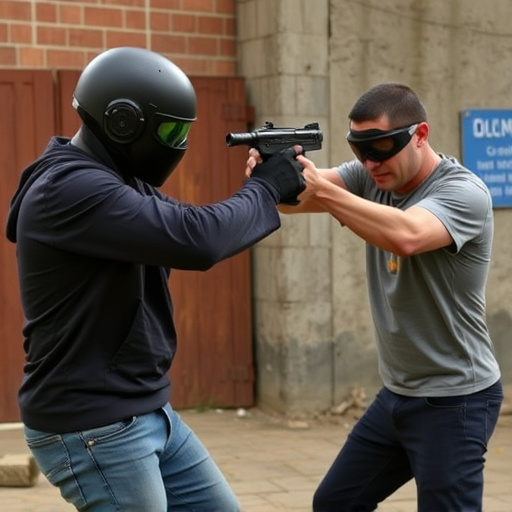
Pepper spray technology has advanced significantly, especially in water-resistant formulations that maintain capsaicin concentration on skin and eyes during wet conditions like rain, ensuring maximum defensive effect. While rain can dilute chemical composition, misting, or decreased coverage area, civilian-grade pepper sprays remain highly effective deterrents and self-defense tools when used properly. Users should understand local laws, practice target acquisition, store spray securely, and avoid excessive spraying in rainy environments to ensure safe and responsible use.
“Uncover the power of civilian-grade pepper defense spray, a versatile self-defense tool. In this comprehensive guide, we explore the science behind its effectiveness, delving into how weather conditions, particularly rain, impact performance.
Learn about the advanced technology powering these sprays and discover their true potential in real-world scenarios. We’ll also dissect safety considerations and responsible usage practices to ensure informed decisions.
Get ready to understand why civilian pepper spray is a game-changer for personal safety, especially when facing challenging weather conditions like rain.”
- Understanding Pepper Spray Technology
- The Impact of Rain on Pepper Spray Performance
- Civilian Grade Pepper Spray: A Closer Look
- Effectiveness in Real-World Scenarios
- Safety Considerations and Responsible Use
Understanding Pepper Spray Technology
Pepper spray technology has evolved significantly over the years, with advancements aimed at enhancing its effectiveness and safety. At its core, pepper spray works by irrigating the eyes and respiratory system with a capsaicin solution, which is derived from chili peppers. This irritant triggers a burning sensation, temporarily blinding and disorienting the target. The technology behind civilian-grade pepper sprays has been refined to offer better performance under various conditions, including weather elements like rain.
One of the critical considerations in understanding pepper spray effectiveness in rain is how well the spray solution remains intact and reaches its intended target. Rain can dilute or wash away the pepper spray, reducing its impact. However, modern formulations are designed to be water-resistant, ensuring that the capsaicin oil remains concentrated on the skin and eyes, maximizing the defensive effect even in wet conditions. This advancement makes civilian-grade pepper sprays a reliable option for personal safety in diverse environments, including those with frequent rainfall.
The Impact of Rain on Pepper Spray Performance
The performance of civilian-grade pepper defense spray can be significantly affected by rain, which serves as a critical environmental factor that influences its effectiveness. Pepper spray is designed to create temporary blindness and difficulty breathing in potential attackers, relying on the eyes and respiratory system as primary targets. However, when exposed to rain, the chemical composition of the spray begins to dilute more rapidly due to water absorption, leading to reduced impact and shorter duration of effect.
In addition, rain can alter the spraying pattern and range, causing misting or reduced coverage area. This is particularly problematic in outdoor scenarios where the pepper spray was initially intended to be used. The wet environment also increases surface tension, potentially affecting the adhesion of the pepper spray particles to the target areas, further diminishing its effectiveness. As a result, users need to be aware of these challenges and consider alternative strategies or additional protective gear when operating in rainy conditions to maintain optimal pepper spray performance.
Civilian Grade Pepper Spray: A Closer Look
Civilian-grade pepper spray is designed for personal protection, offering a non-lethal way to deter and incapacitate attackers. Unlike other types, this grade is specifically formulated to be effective even in adverse conditions like heavy rain. The key lies in its active ingredient concentration and water-resistant properties. Modern formulations ensure the spray maintains its potency, providing users with a reliable means of self-defense regardless of weather.
When considering pepper spray effectiveness in rain, it’s crucial to look for products that have been thoroughly tested against moisture. Water can dilute the spray’s impact, but superior-quality civilian-grade options use advanced technologies to minimize this effect. This includes specialized canisters designed to withstand water penetration and rapid-dissipating formulations that ensure a strong enough hit even when the spray is slightly diluted by rainfall.
Effectiveness in Real-World Scenarios
In real-world scenarios, civilian-grade pepper defense spray has proven its effectiveness as a deterrent and tool for self-defense against potential attackers. When used correctly, it can incapacitate an aggressor, providing the user with crucial time to escape or seek help. The active ingredient in these sprays, capsaicin, stimulates nerve endings, causing intense pain, tearing, and temporary blindness, which can be life-saving in dangerous situations.
One factor that often raises questions about pepper spray effectiveness is its performance in adverse conditions like rain. Contrary to common belief, pepper spray remains effective even in the rain. Waterproof designs and the repellent nature of capsaicin ensure that the spray continues to work as intended when deployed against an attacker, regardless of weather conditions. This makes civilian-grade pepper spray a reliable and efficient option for personal safety, applicable in various outdoor settings, including rainy environments.
Safety Considerations and Responsible Use
When considering civilian-grade pepper defense spray, safety and responsible use are paramount. It’s crucial to understand that while pepper spray is an effective deterrent against potential threats, its performance can be influenced by environmental factors like rain. In wet conditions, the spray’s chemical composition may dissipate faster, reducing its effectiveness. This doesn’t render it useless, but users should be aware of the potential for reduced impact and range.
To ensure safety, individuals should familiarize themselves with local laws regarding pepper spray ownership and use. Proper handling techniques are essential; always store the spray in a secure, labeled container out of reach of children and unauthorized persons. Users should also practice target acquisition and deployment in controlled settings to develop muscle memory for accurate, safe application during an emergency. Responsible use includes avoiding excessive spraying and respecting bystanders to prevent accidental exposure or injury.
In light of our discussions on pepper spray technology, its performance in various conditions, and safety considerations, it’s clear that civilian-grade pepper spray remains an effective personal defense tool. While rain can impact its effectiveness, especially in terms of Pepper Spray Effectiveness in Rain, proper usage and understanding of the product’s limitations can mitigate these challenges. Ultimately, responsible use and awareness of safety measures ensure that individuals are prepared to defend themselves in real-world scenarios.